
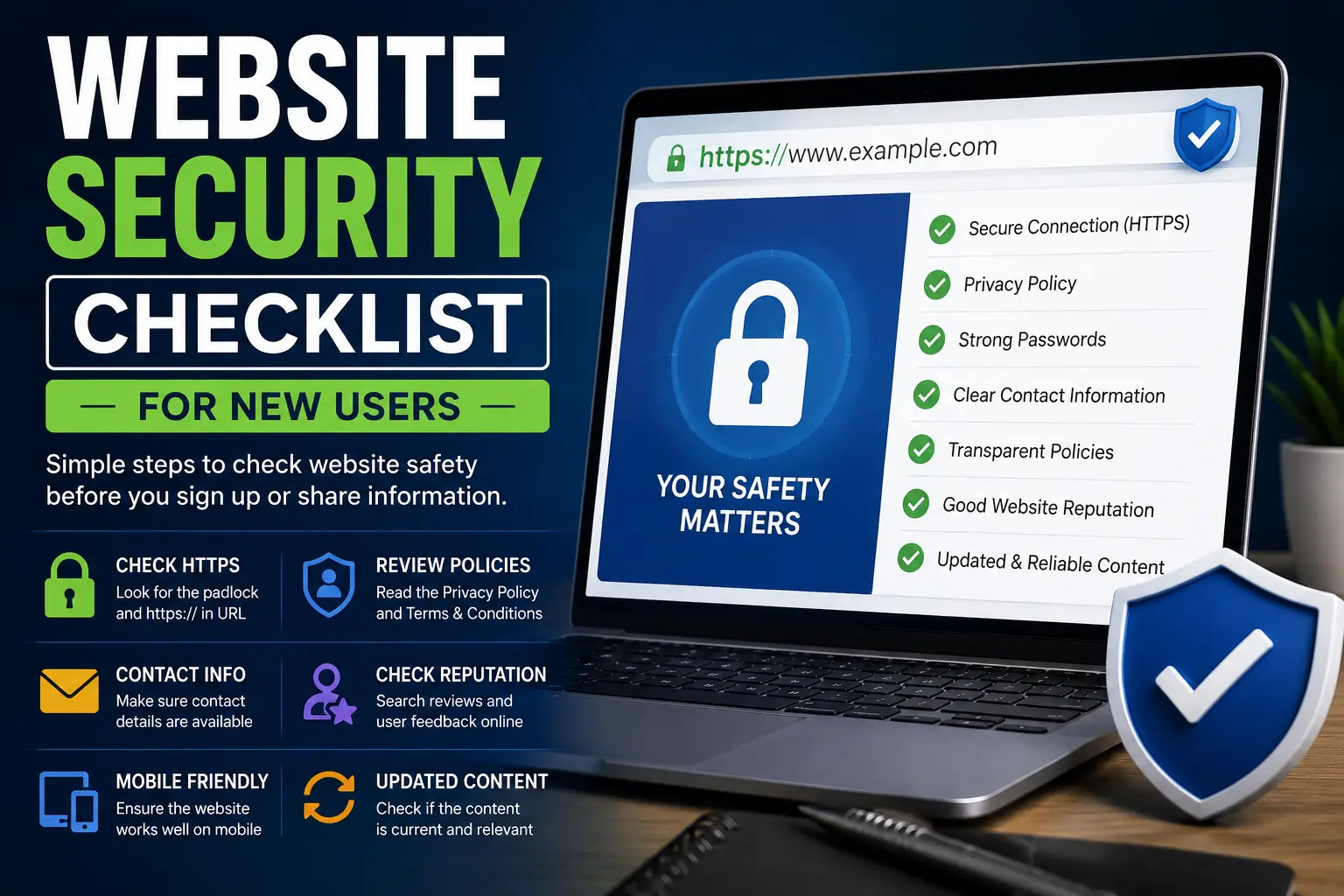
The internet provides access to countless websites and online platforms. While many websites are legitimate and trustworthy, others may lack proper security measures or transparency. For new users, understanding how to evaluate website security is an essential skill.
Before creating an account, sharing personal information, or interacting with any online platform, it is important to perform a basic security check.
This website security checklist will help you identify important trust signals and avoid common mistakes when exploring websites online.
Why Website Security Matters
Website security protects users from potential risks such as:
- Data theft
- Privacy concerns
- Unauthorized access
- Fraudulent activities
- Misleading information
A secure website helps create a safer and more reliable online experience for everyone.
Check for HTTPS Encryption
The first thing you should verify is whether the website uses HTTPS.
What Is HTTPS?
HTTPS encrypts information exchanged between users and websites. This makes it more difficult for unauthorized parties to access sensitive data.
How to Check
Look for:
- A padlock icon in the browser address bar
- A website address beginning with “https://”
While HTTPS alone does not guarantee trustworthiness, it is an important security requirement.
Review the Privacy Policy
Every trustworthy website should provide a privacy policy.
A privacy policy explains:
- What information is collected
- How information is used
- Whether data is shared with third parties
- User rights regarding personal information
Missing privacy information can be a warning sign.
Verify Contact Information
Reliable websites usually provide clear contact details.
Look for:
- Contact page
- Email address
- Contact form
- Business information if applicable
Accessible contact information demonstrates transparency and accountability.
Examine the Website Design
A professional website often reflects attention to quality and user experience.
Consider:
- Easy navigation
- Clear structure
- Functional links
- Mobile responsiveness
- Professional presentation
While design alone is not enough to determine reliability, poor website maintenance may indicate potential concerns.
Check for an About Us Page
An About Us page helps users understand:
- Who operates the website
- The website’s purpose
- Its mission and goals
Transparent websites usually make this information easy to find.
Review Terms and Policies
Trustworthy websites often publish:
Terms and Conditions
Explains website usage rules.
Disclaimer
Clarifies the purpose of content and limitations.
Editorial Policy
Describes content standards and publishing practices.
The presence of these pages often indicates greater transparency.
Evaluate Content Quality
Quality content is an important trust signal.
Look for content that is:
- Well organized
- Easy to understand
- Free from excessive errors
- Updated regularly
Helpful and informative content demonstrates a commitment to user value.
Assess Website Reputation
Before interacting with a platform, spend a few minutes researching its reputation.
Helpful methods include:
- Reading independent reviews
- Checking community discussions
- Looking for user feedback
- Reviewing public mentions
Consistent positive feedback can strengthen confidence in a website.
Look for Security Features
Modern websites often implement additional security measures.
Examples include:
Strong Password Requirements
Encourages better account security.
Two-Factor Authentication
Adds an extra layer of account protection.
Secure Login Systems
Helps prevent unauthorized access.
Security-focused platforms prioritize user protection.
Check Mobile Compatibility
Many users access websites through smartphones and tablets.
A secure and trustworthy website should:
- Load properly on mobile devices
- Display content correctly
- Provide smooth navigation
Poor mobile experiences may indicate neglected maintenance.
Watch for Warning Signs
Certain red flags may suggest potential problems.
Common warning signs include:
- Excessive advertisements
- Broken pages
- Missing contact information
- Lack of transparency
- Outdated content
- Poor user experience
Multiple warning signs deserve additional caution.
Analyze Website Transparency
Transparency is one of the strongest indicators of trust.
Ask yourself:
- Is ownership information available?
- Are policies clearly explained?
- Can users contact the website?
- Is important information easy to find?
Transparent websites generally provide better user experiences.
Quick Website Security Checklist
Before using any website, verify the following:
Security
✔ HTTPS encryption
✔ Secure login systems
✔ Strong password requirements
Transparency
✔ About Us page
✔ Contact information
✔ Privacy Policy
✔ Terms and Conditions
User Experience
✔ Easy navigation
✔ Mobile-friendly design
✔ Updated content
Reputation
✔ Positive user feedback
✔ Independent mentions
✔ Helpful content
If a website meets most of these criteria, it is generally a positive sign.
Common Mistakes New Users Make
Many users ignore basic security checks.
Common mistakes include:
- Creating accounts without research
- Ignoring privacy policies
- Overlooking contact information
- Trusting websites based solely on appearance
- Skipping reputation checks
Taking a few minutes to evaluate a website can help avoid future issues.
Benefits of Following a Security Checklist
Using a website security checklist helps users:
- Make informed decisions
- Protect personal information
- Improve online safety
- Identify trustworthy platforms
- Build better browsing habits
These benefits contribute to a more secure online experience.
Final Thoughts
Website security is not only the responsibility of website owners. Users also play an important role in protecting themselves online.
By following this website security checklist, new users can better evaluate websites before sharing information or creating accounts. Security, transparency, reputation, and user experience should always be considered when assessing an online platform.
Frequently Asked Questions
What is the most important website security check?
Checking for HTTPS encryption is one of the first and most important security checks.
Why is a privacy policy important?
A privacy policy explains how a website collects, stores, and uses user information.
Can a website be secure without HTTPS?
HTTPS is considered a basic security requirement for modern websites.
What are common website warning signs?
Missing contact information, poor transparency, broken pages, and excessive advertisements are common warning signs.
How often should users evaluate website security?
Users should perform basic security checks whenever they visit or register on a new website.


